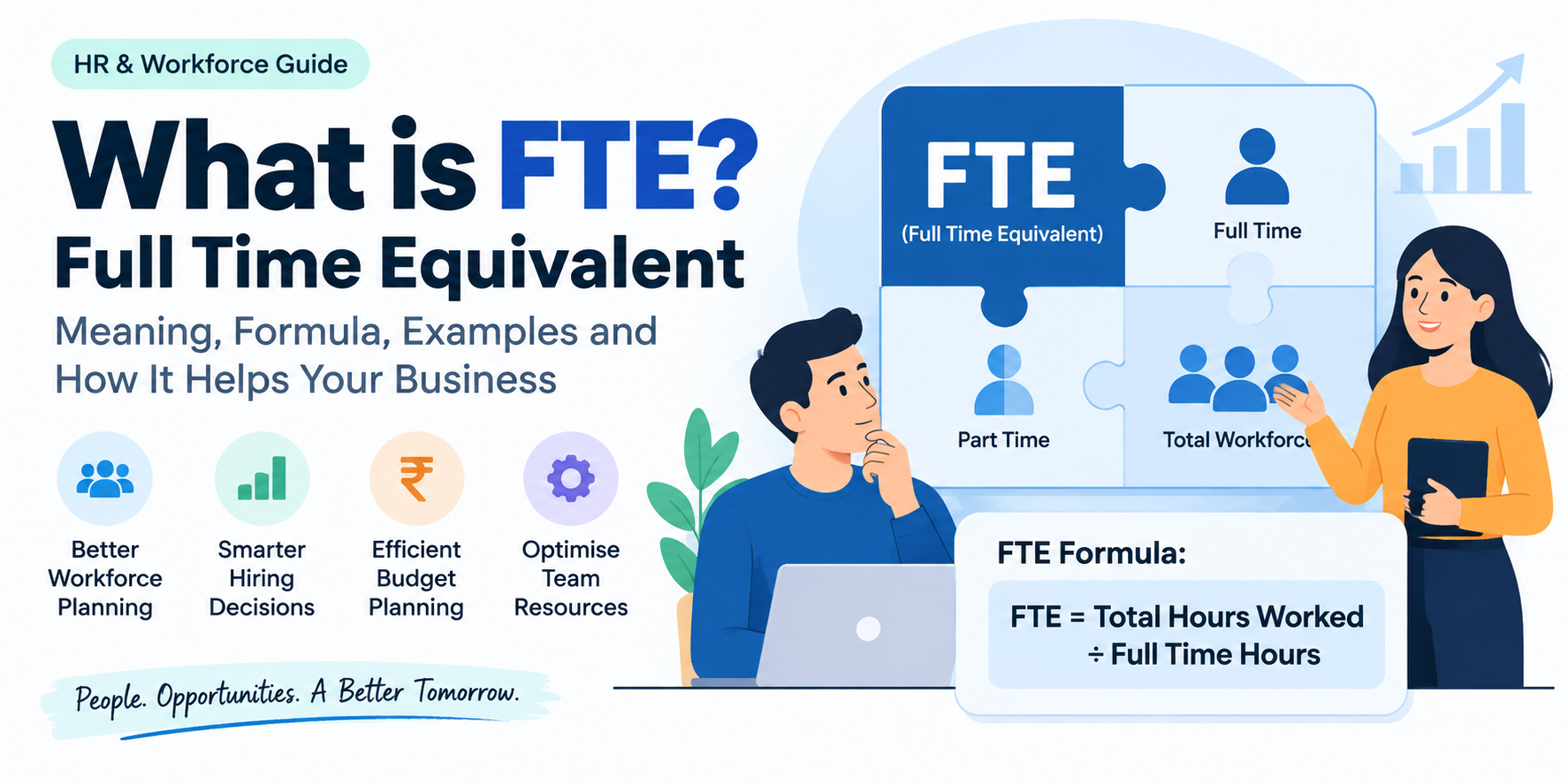
When a team needs more capacity, the first question is often whether to hire an intern or a full time employee. Comparing only the stipend and salary makes the answer look obvious. Yet compensation is just one part of the decision. Recruitment effort, supervision, training, tools, project risk, continuity, and future hiring needs all affect the actual return.
A useful internship vs full time hire cost comparison should therefore examine the work itself before comparing candidates. Some assignments create an ideal learning opportunity for an intern. Others require ownership, specialist judgment, or long term accountability that belongs with an experienced employee.
For founders, HR teams, and hiring managers, the objective is not simply to select the lower cost option. It is to choose the talent model that delivers the required result with acceptable cost, speed, and risk.
Start With the Work, Not the Job Title
Before calculating costs, define the work that is currently waiting. A vague need for more hands can lead to the wrong hire. Break the workload into responsibilities and classify each one by complexity, duration, and business impact.
An internship can be appropriate when the work is structured, teachable, reviewable, and limited in scope. Examples include market research, content audits, data organization, competitor tracking, customer survey analysis, basic design production, testing support, and documented operational tasks.
A full time hire is usually more suitable when the role requires independent decisions, ownership of critical systems, confidential judgment, client accountability, team leadership, or continuity across multiple business cycles.
Ask these practical questions:
- Can the assignment be explained through a clear process?
- Can progress be reviewed at defined intervals?
- Is there a manager available to answer questions?
- Would an error create serious financial, legal, or customer risk?
- Will the responsibility still exist after the internship period?
- Does success require deep knowledge of the company or industry?
If the work is temporary and structured, an intern may offer strong value. If it is permanent and central to operations, a full time employee may produce a better return despite the higher direct cost.
Build a Complete Cost Ledger for Each Option
A credible internship vs full time hire cost comparison needs a complete cost ledger. For an intern, include the stipend, sourcing effort, screening time, onboarding, manager supervision, software access, equipment, learning resources, and the cost of reviewing or correcting work.
For a full time employee, include salary, statutory obligations, benefits, recruitment fees where applicable, interview time, onboarding, equipment, software, training, management time, and the financial exposure created by a poor hiring decision. Also consider notice periods and replacement effort if the employee leaves.
Use the following structure for both options:
- Talent sourcing and application management
- Interview and selection time
- Compensation and applicable benefits
- Equipment, tools, and workspace
- Onboarding and training
- Ongoing supervision
- Quality review and correction
- Replacement or conversion costs
This exercise often reveals that an intern has a lower direct cost but a higher supervision requirement. A full time employee may cost more in compensation but require less guidance after becoming productive. Neither conclusion is universal. The right answer depends on the assignment and the capability of the person selected.
Convert Manager Time Into a Visible Cost
Manager time is one of the most overlooked variables in internship planning. If a founder or senior employee spends several hours each week explaining tasks, checking every detail, and repairing avoidable mistakes, those hours have a real business value.
Estimate the manager cost by recording the time required for preparation, instruction, reviews, meetings, and corrections. Apply an internal hourly cost to that time. The figure does not need to be perfect. Its purpose is to make supervision visible instead of treating it as an unlimited resource.
Strong internship design can reduce this cost. Prepare a concise onboarding guide, provide examples of acceptable work, define approval points, and assign one responsible mentor. Group questions into scheduled check ins rather than allowing constant interruptions. Give the intern access only to the information and systems required for the assignment.
The same analysis should be applied to a full time hire. New employees also require onboarding and support. The difference is that this investment may be recovered over a longer period. If the company expects the work to continue for years, the initial training cost can be distributed across a much longer contribution window.
Compare Output, Risk, and Time to Value
Cost alone does not measure hiring value. The company must also estimate what usable output each option can deliver and when that output will become available.
For each hiring route, define the expected deliverables, required quality, review burden, and completion timeline. Then consider the value of those deliverables to the business. Research that informs a market decision may have greater value than a large volume of activity with no clear use.
Risk should be priced into the comparison as well. Assigning an intern to a controlled research project creates a different level of exposure from giving that intern unsupervised access to customer communication, financial records, or production systems. Lower direct cost does not justify placing essential business responsibilities with someone who is still learning.
Continuity matters too. An intern may complete a defined project successfully but leave at the end of the term. The company then needs documentation and a handover plan. A full time employee offers greater continuity, although retention is never guaranteed.
A practical comparison should assess:
- Time until useful work begins
- Expected volume and quality of output
- Manager review required
- Cost and impact of errors
- Need for knowledge retention
- Likelihood that the workload will continue
- Potential to convert the intern into a future employee
Use a Simple Hiring Decision Framework
Choose an intern when the company has a defined learning opportunity, a limited assignment, realistic expectations, and a manager who can provide guidance. The internship should give the student meaningful exposure while producing useful work for the business.
Choose a full time employee when the need is ongoing, the role requires independent ownership, and the cost of inconsistency or turnover would be substantial. A permanent workload should not be repeatedly repackaged as a temporary internship merely to reduce compensation.
A third option is to use an internship as an informed evaluation path. The company can observe communication, learning ability, reliability, and practical execution before considering a permanent offer. This can improve hiring confidence, but conversion should never be assumed or promised unless the company is prepared to make that commitment.
Document the decision using a one page comparison. List the business need, duration, direct cost, management cost, expected output, key risks, and success criteria for each option. This gives HR and business leaders a shared basis for approval instead of relying on instinct.
If an internship is the right model, sourcing should not add unnecessary expense. Apply My Internship helps companies reach students and emerging talent while allowing employers to post an internship at no cost. A clear listing that explains the assignment, skills, duration, support, and expected outcomes can attract applicants who understand the opportunity.
The best hiring choice is not automatically the least expensive one. It is the option that matches the work, protects management capacity, and creates the strongest return for the company. When that option is an intern, AMI offers a practical place to begin the search.
 Previous articleCrafting a Winning Internship Offer Letter: Your Blueprint for Top Talent Acquisition
Next article Strategic Intern Integration: Maximizing Value and Minimizing Risk
Previous articleCrafting a Winning Internship Offer Letter: Your Blueprint for Top Talent Acquisition
Next article Strategic Intern Integration: Maximizing Value and Minimizing Risk