Build product management projects for students by choosing a real user problem, validating it, prioritising a solution, and publishing your decisions and evidence. This matters because recruiters want to see how you think, not just whether you can define product management terms.
Highlights
- ☐ Choose a narrow problem affecting users you can reach
- ☐ Collect evidence through conversations, observation, or existing feedback
- ☐ Define the user, problem, goal, and success measure
- ☐ Prioritise a realistic solution and create a simple prototype
- ☐ Test your assumptions and document what changed
- ☐ Publish the work as a concise portfolio case study
Set up a project you can actually finish
You do not need a product management internship, a developer, or a large budget before you begin. You need access to potential users, a problem worth investigating, a place to organise your work, and enough curiosity to question your first idea.
Start in an environment you already understand. Your college club, library, canteen, student society, placement cell, or local business can provide realistic problems. Ask what wastes time, creates confusion, or repeatedly causes complaints. Avoid beginning with an app idea and then searching for a problem that justifies it.
Choose a project with a clear user and an outcome you can observe. The following options produce useful portfolio evidence without requiring a live product.
| Project direction | Problem you could explore | Evidence to produce |
|---|---|---|
| Campus event discovery | Students miss relevant events because information is scattered | User notes, journey map, prioritised features, and prototype |
| Club member onboarding | New members do not know their responsibilities | Problem statement, workflow, and onboarding test |
| Canteen feedback | Feedback is collected but not organised into useful decisions | Feedback categories, dashboard outline, and action plan |
| Student marketplace | Buyers struggle to assess trust and item condition | User stories, risk analysis, and listing prototype |
| Campaign planning | A student organisation cannot tell which messages attract signups | Audience segments, experiment plan, and measurement framework |
Projects for marketing students can also become strong product case studies. Instead of presenting only a campaign, investigate an audience problem, propose a landing page or signup flow, define an experiment, and explain how user behaviour would influence the next product decision.
Browse product analytics internships on Apply My Internship to understand how employers describe data interpretation, experiments, funnels, and reporting. Use those descriptions to identify useful skills, but keep your project focused on solving a real problem rather than copying a job post.
How to create product management projects for students
-
Find a specific user problem
Speak with people you can access and ask about recent behaviour. Ask what they tried, what went wrong, and how they handled it. Questions about actual experiences are more useful than asking whether someone likes your proposed idea.
Write each observation separately. Group similar observations, then select a problem that appears meaningful and manageable. Your final statement should identify the user, the situation, the difficulty, and its consequence.
-
Define the goal and project boundary
Decide what your project will and will not cover. A project about improving college event discovery might focus on finding relevant events, while leaving ticket payments and attendance tracking outside the scope.
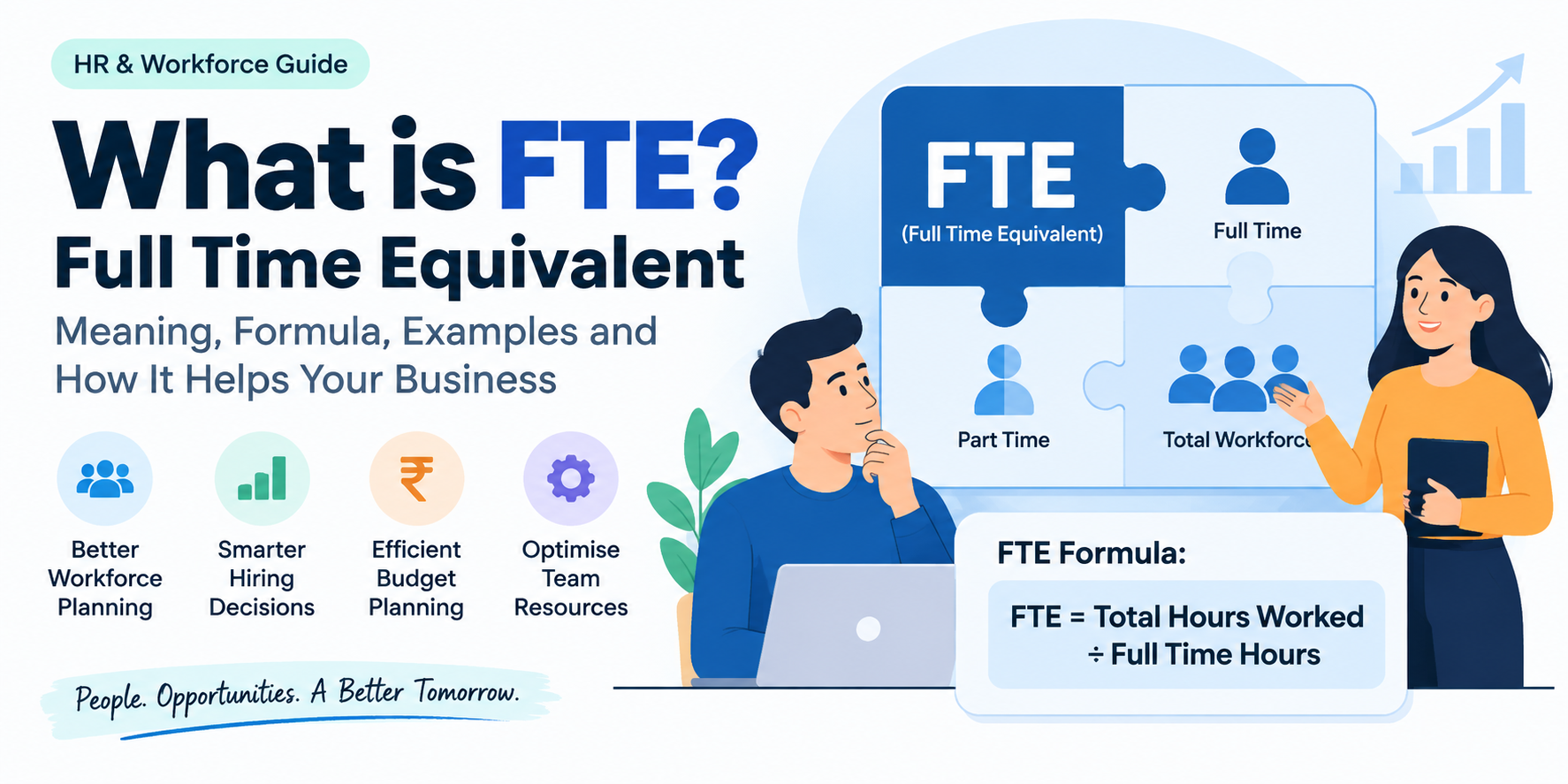
You may encounter FTE in project management while researching project plans. FTE means full time equivalent, a way of expressing work capacity based on a full time workload. For a student project, you usually do not need a formal FTE calculation, but you should still state who would perform the work and whether the proposed scope is realistic.
-
Turn research into a product requirement
Create a short requirement document covering the user, problem, goal, constraints, and assumptions. Add user stories that describe what the user wants to accomplish and why. Do not fill the document with features before you have explained the problem.
If your idea involves coordinating different groups, review stakeholder management internships to see how roles involving communication, expectations, and competing priorities are described. Your case study should identify affected groups and explain how their needs differ.
-
Generate options and prioritise them
List several possible responses to the problem before choosing one. Compare them based on user value, effort, risk, and learning potential. Recruiters are interested in the trade offs you considered, so preserve rejected options and explain why they were not selected.
For an internal workflow project, operations management internships can help you notice practical themes such as process clarity, handovers, and resource use. Translate those themes into decisions relevant to your users rather than turning the project into a general operations report.
-
Create the simplest testable version
Build only what you need to test the riskiest assumption. This might be a paper sketch, clickable screen flow, form, spreadsheet, or manually delivered service. A polished interface is less valuable than a rough prototype that produces useful feedback.
Write down what you expect users to do before testing. Observe where they hesitate, what they misunderstand, and whether they can complete the intended task. Record evidence without defending your design.
-
Review evidence and make a decision
Compare what happened with what you expected. Decide whether to continue, revise the solution, narrow the audience, or reconsider the original problem. A credible product manager does not pretend every assumption was correct.
Students interested in measurement can study the responsibilities shown in business management internships and consider how product choices connect with adoption, service quality, cost, or organisational goals. Keep your chosen measure directly connected to the project outcome.
-
Publish a recruiter friendly case study
Present the work as a decision story. Lead with the problem and your role, then show research, priorities, prototype, feedback, and lessons. Include artefacts that prove your contribution, but remove names, contact details, and confidential information.
When the case study is ready, compare it with the skills requested in product management internships on Apply My Internship. Adjust the explanation of your work where needed, but never claim tools, results, or responsibilities you did not have.
A case study template you can copy
Use this structure for a portfolio page, presentation, or document:
- Project title: A plain description of the problem
- Context: Where the problem occurs and why it deserves attention
- User: The specific group experiencing the problem
- My role: What I researched, created, tested, and decided
- Problem statement: The difficulty, situation, and user consequence
- Evidence: What users said or did and the patterns you observed
- Goal: The behaviour or outcome the solution should improve
- Options considered: The ideas compared and the trade offs involved
- Chosen approach: What you selected and why
- Prototype and test: What users tried and where they struggled
- Decision: What you would keep, change, or remove
- Reflection: What you learned and what you would investigate next
Here is a real life style example from a common student setting. A student society coordinator notices that volunteers miss tasks because instructions arrive across different chat groups. The student interviews members, maps the handover process, creates a shared task flow, tests it during an event, and documents where reminders and ownership labels reduce confusion. The project demonstrates discovery, prioritisation, workflow design, testing, and stakeholder thinking without pretending to have built a commercial product.
Mistakes that weaken an otherwise good project
- Starting with a feature: Saying you want to build an app does not explain whose problem you are solving.
- Using imaginary research: Do not invent interviews, survey results, user quotes, or outcomes. Clearly label assumptions.
- Making the scope too broad: Solving every campus problem will produce a vague project. Pick one journey and one user group.
- Showing only attractive screens: Recruiters need to see reasoning, evidence, priorities, and changes, not just visual design.
- Hiding failed tests: A failed assumption can demonstrate judgement when you explain what you learned and changed.
- Claiming business impact without proof: Separate observed results from outcomes that would require a live launch.
- Ignoring execution: Explain dependencies, ownership, constraints, and how the idea could operate in practice.
On Apply My Internship in November 2026, Apply My Internship showed 151 live internships from 138 companies; 75% were paid, with 51 remote, 9 hybrid, and 91 on site. The top cities were Bengaluru, Mumbai, Pune, New Delhi, and Delhi, while the typical monthly stipend for paid internships was about ₹7,500 to ₹14,000, with a middle value of about ₹9,500 from 111 listings. These are platform figures, not figures for the entire internship market, but they show why a portfolio should work for both remote applications and nearby roles.
Frequently asked questions
Can I create a product project without an internship?
Yes, a self directed project can demonstrate product thinking when it uses genuine user evidence and honestly states your role. Student internships provide workplace exposure, but you do not have to wait for one before building a portfolio.
Do I need coding skills for a product management project?
No, you can test a product idea with sketches, forms, spreadsheets, clickable screens, or a manual service. Technical awareness helps you discuss feasibility, but the project should mainly demonstrate problem solving and decision making.
What is FTE in project management?
It depends on how an organisation reports capacity, but FTE generally means full time equivalent. In FTE project management discussions, it helps teams express how much full time work capacity a task or project requires rather than simply counting people.
Can marketing students build product management projects?
Yes, marketing students can explore acquisition journeys, campaign landing pages, customer feedback, onboarding, or retention problems. The key is to move beyond promotion and show how evidence informed a product decision.
Should I include a project that did not achieve the expected result?
Yes, if you clearly explain the assumption, test, evidence, and resulting decision. Honest learning is stronger than an unsupported success claim, especially for freshers seeking internship opportunities for students.
Can a project help me find relevant internships?
Yes, a focused case study gives you evidence to discuss in applications and interviews. Use it to target internships for students where the responsibilities match your demonstrated research, prioritisation, analytics, or stakeholder skills.
Take your next steps today
Choose one environment you understand, write down one recurring user problem, and arrange a conversation with someone who experiences it. Then create your problem statement, define the smallest useful test, and open a document using the case study template above.
Once you have evidence and a presentable project, use Apply My Internship to explore Paid, Remote, or Nearby opportunities that fit your availability. Apply selectively, attach your case study where appropriate, and be ready to explain one decision you changed because of user evidence.
Ready to take the next step? Browse product management internships on Apply My Internship.